
My PATTH with hypoparathyroidism is unknown, but my purpose is clear
Contributing to research is one way I can help my hypopara community
Written by |




Editor’s note: This story includes a mention of suicide. If you or someone you know needs help, the national suicide and crisis lifeline in the U.S. is available by calling or texting 988. There is also an online chat at 988lifeline.org. Internationally, find a suicide prevention helpline at findahelpline.com.
“… To boldly go where no man has gone before.” — Captain James T. Kirk, “Star Trek”
On a rainy Monday, after a relaxing acupuncture session, I put on a sports documentary and settled onto my sofa with a cup of tea. The rain drummed gently against the roof, mirroring the calm I felt inside.
I exhaled the week’s worry, feeling a sense of peace envelop me. Little did I know that this documentary wouldn’t just pass the time but ignite a profound reflection on my legacy.
The documentary, which focused on the late NFL player Aaron Hernandez, drew me in deeply. His journey reminded me of the profound impact one person can have and shaped my thoughts on my own legacy.

The impact of research
The documentary followed Hernandez’s trajectory from youth football to playing in the Super Bowl. He faced much adversity growing up, and his outlet was a 100-yard field.
Over the years, Hernandez sustained numerous head injuries from contact with elite athletes, resulting in chronic traumatic encephalopathy (CTE). This brain disease causes nerve cells to die, often leading to serious memory and behavioral problems. Scientists believe that CTE — which can only be diagnosed through autopsy — may have contributed to Hernandez’s poor decisions and violent behavior. (He was convicted of first-degree murder in 2015 and sentenced to life in prison, where he died by suicide two years later.)
After his death in 2017, researchers at Boston University’s CTE Center studied Hernandez’s brain to better understand the impact of the repeated blows to the head and concussions that many football players sustain.
This research led to advancements in helmet safety, with new designs tailored to specific positions to help reduce the impact of head injuries. This is something to celebrate during March’s Brain Injury Awareness Month.
Finding my purpose
This made me reflect on my mission to help others with hypoparathyroidism. After some consideration, I sent the following email to my endocrinologist:
“I decided that I want to donate my body to you and the endocrine department. I think the only way to understand better future treatments for generations to come would be studying a cadaver who battled hypoparathyroidism. There is only so much storytelling or advocating I can do.”
He responded:
“Thank you so much for sharing your wish to contribute to science in such a deeply meaningful way. I am truly touched by your generosity and the spirit behind this; this speaks volumes about your dedication to advancing the understanding of hypoparathyroidism and helping others.”
I thought dedicating my body to hypoparathyroidism research would be a meaningful way to contribute to science and help researchers develop new treatments. However, I soon came across a different, life-changing opportunity.
A supporter of mine connected me with the University of California, San Francisco (UCSF), where researchers are conducting a Phase 1/2 trial called Parathyroid Allotransplant for Treatment of Hypoparathyroidism, or PATTH. The study will involve transplanting parathyroid tissues from cadavers into the forearms of three people with hypoparathyroidism to see if their parathyroid hormone, calcium, and phosphorus levels stabilize. If the transplant is successful, it could significantly improve patients’ quality of life.
Changing the narrative
I have battled hypoparathyroidism for over half my life, and even after trying all of the approved treatments, I still suffer. It feels like a death sentence. I was feeling hopeless about my situation one day when my phone rang; on the line was one of the researchers from the PATTH study.
The transplant was explained to me in great detail. By the end of the phone call, I was hysterically crying, realizing I could be a fit for this procedure. If I am one of the three selected, I could potentially get my life back.
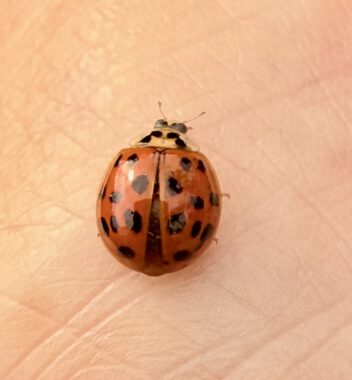
A ladybug lands on Bari’s hand, which she interpreted as a sign from her late father. (Photo by Bari Vapnek)
I am no stranger to clinical trials, having been one of the first patients enrolled in the TransCon PTH Phase 2 trial. Everything happens the way it should, but never in my wildest dreams did I think a transplant was possible. Before he died, my daddy always expressed that he wanted to give me his parathyroid glands. Wishful thinking, I always replied.
After that call with the researcher, I visited my dad’s resting place and told him about this cutting-edge approach to hypoparathyroidism treatment. I felt at peace, happy, and hopeful.
I always believe in signs, so when a ladybug landed on my hand, I knew my dad had heard me and was proud of my perseverance.
I don’t know what comes next. This brave butterfly would be honored to go where no (wo)man has gone before, for all who battle hypoparathyroidism. Until then, I remain hopeful that even if I am not selected, three hypopara warriors may regain their lives. The best is yet to come, thanks to medical research. Anything is possible if you believe.
Note: Hypoparathyroidism News is a strictly news and information website about the disease. It does not provide medical advice, diagnosis, or treatment. This content is not intended to be a substitute for professional medical advice, diagnosis, or treatment. Always seek the advice of your physician or another qualified health provider with any questions you may have regarding a medical condition. Never disregard professional medical advice or delay in seeking it because of something you have read on this website. The opinions expressed in this column are not those of Hypoparathyroidism News or its parent company, Bionews, and are intended to spark discussion about issues pertaining to hypoparathyroidism.


Leave a comment
Fill in the required fields to post. Your email address will not be published.